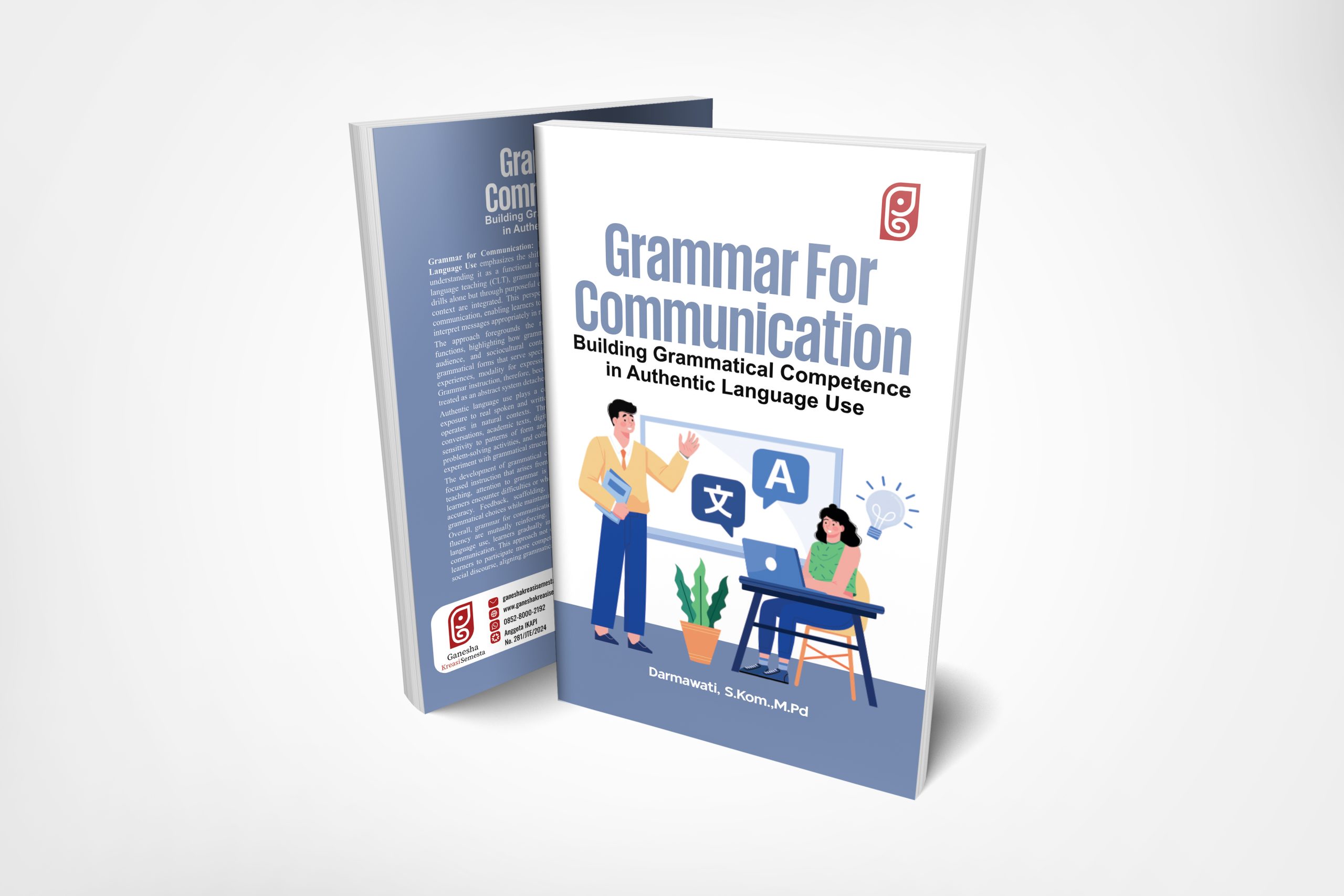
Grammar For Communication: Building Grammatical Competence in Authentic Language Use
Grammar for Communication: Building Grammatical Competence in Authentic Language Use emphasizes the shift from viewing grammar as a set of isolated rules to understanding it as a functional resource for meaning-making. Within communicative language teaching (CLT), grammatical competence is not developed through mechanical drills alone but through purposeful engagement in language use where form, meaning, and context are integrated. This perspective recognizes grammar as essential to successful communication, enabling learners to express intentions accurately, negotiate meaning, and interpret messages appropriately in real-world interactions.
The approach foregrounds the relationship between grammar and communicative functions, highlighting how grammatical choices vary according to discourse purpose, audience, and sociocultural context. Learners are encouraged to notice and use grammatical forms that serve specific communicative goals, such as tense for narrating experiences, modality for expressing stance, and clause structures for argumentation. Grammar instruction, therefore, becomes embedded in authentic texts and tasks rather than treated as an abstract system detached from use.
Authentic language use plays a central role in building grammatical competence, as exposure to real spoken and written discourse helps learners recognize how grammar operates in natural contexts. Through interaction with meaningful input—such as conversations, academic texts, digital media, and professional genres—learners develop sensitivity to patterns of form and function. Communicative tasks such as role-plays, problem-solving activities, and collaborative writing provide opportunities for learners to experiment with grammatical structures while focusing primarily on meaning.
The development of grammatical competence in this framework is supported by form-focused instruction that arises from communicative needs. Rather than pre-emptive rule teaching, attention to grammar is often reactive and contextualized, occurring when learners encounter difficulties or when specific forms are necessary to enhance clarity and accuracy. Feedback, scaffolding, and guided reflection help learners refine their grammatical choices while maintaining fluency and confidence in communication.
Overall, grammar for communication promotes a balanced view in which accuracy and fluency are mutually reinforcing. By integrating grammar instruction with authentic language use, learners gradually internalize grammatical patterns as tools for effective communication. This approach not only improves linguistic accuracy but also empowers learners to participate more competently and confidently in academic, professional, and social discourse, aligning grammatical development with real communicative demands.
Author : Darmawati, S.Kom.,M.Pd
Halaman buku: 162
DOWNLOAD
PRE-ORDER | Rp 62.000