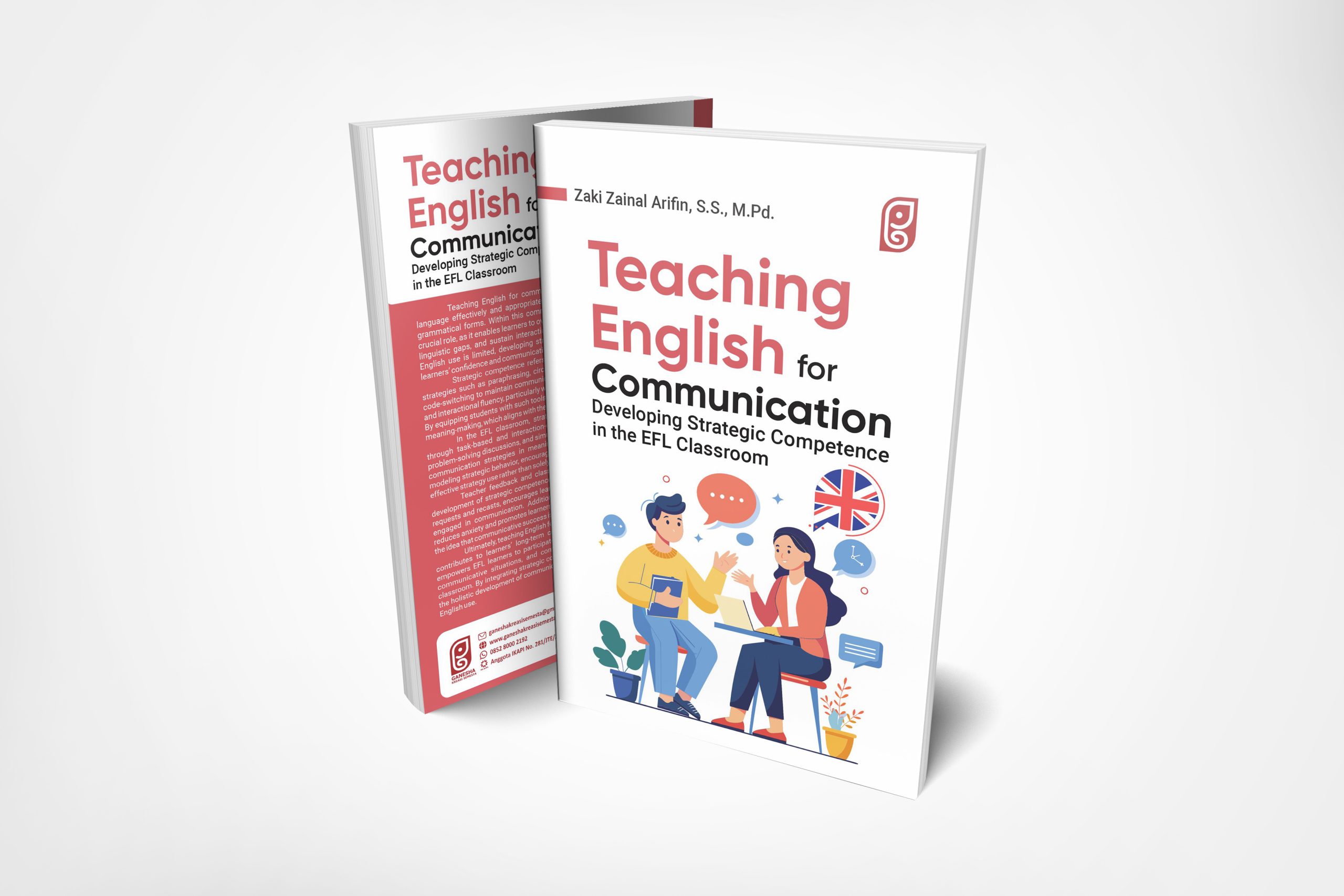
Teaching English For Communication: Developing Strategic Competence in the EFL Classroom
Teaching English for communication emphasizes the ability of learners to use language effectively and appropriately in real-life contexts rather than merely mastering grammatical forms. Within this communicative orientation, strategic competence plays a crucial role, as it enables learners to overcome communication breakdowns, compensate for linguistic gaps, and sustain interaction. In EFL classrooms, where exposure to authentic English use is limited, developing strategic competence becomes essential for fostering learners’ confidence and communicative autonomy.
Strategic competence refers to learners’ ability to employ verbal and non-verbal strategies such as paraphrasing, circumlocution, asking for clarification, using fillers, and code-switching to maintain communication. These strategies support meaning negotiation and interactional fluency, particularly when learners lack vocabulary or grammatical accuracy. By equipping students with such tools, teachers help shift the focus from error avoidance to meaning-making, which aligns with the principles of communicative language teaching.
In the EFL classroom, strategic competence can be systematically developed through task-based and interaction-driven activities. Role plays, information-gap tasks, problem-solving discussions, and simulations provide learners with opportunities to practice communication strategies in meaningful contexts. Teachers play a facilitative role by modeling strategic behavior, encouraging risk-taking, and providing feedback that highlights effective strategy use rather than solely correcting linguistic errors.
Teacher feedback and classroom discourse patterns significantly influence the development of strategic competence. Interaction-focused feedback, such as clarification requests and recasts, encourages learners to notice gaps in their language while remaining engaged in communication. Additionally, creating a supportive classroom environment reduces anxiety and promotes learners’ willingness to experiment with strategies, reinforcing the idea that communicative success is not dependent on perfect language use.
Ultimately, teaching English for communication by prioritizing strategic competence contributes to learners’ long-term communicative effectiveness. Strategic competence empowers EFL learners to participate actively in authentic interactions, adapt to diverse communicative situations, and continue developing their language skills beyond the classroom. By integrating strategic competence into instructional design, teachers support the holistic development of communicative competence and prepare learners for real-world English use.
Penulis: Zaki Zainal Arifin, S.S., M.Pd.
Halaman buku: 180
DOWNLOAD
PRE-ORDER | Rp 66.000