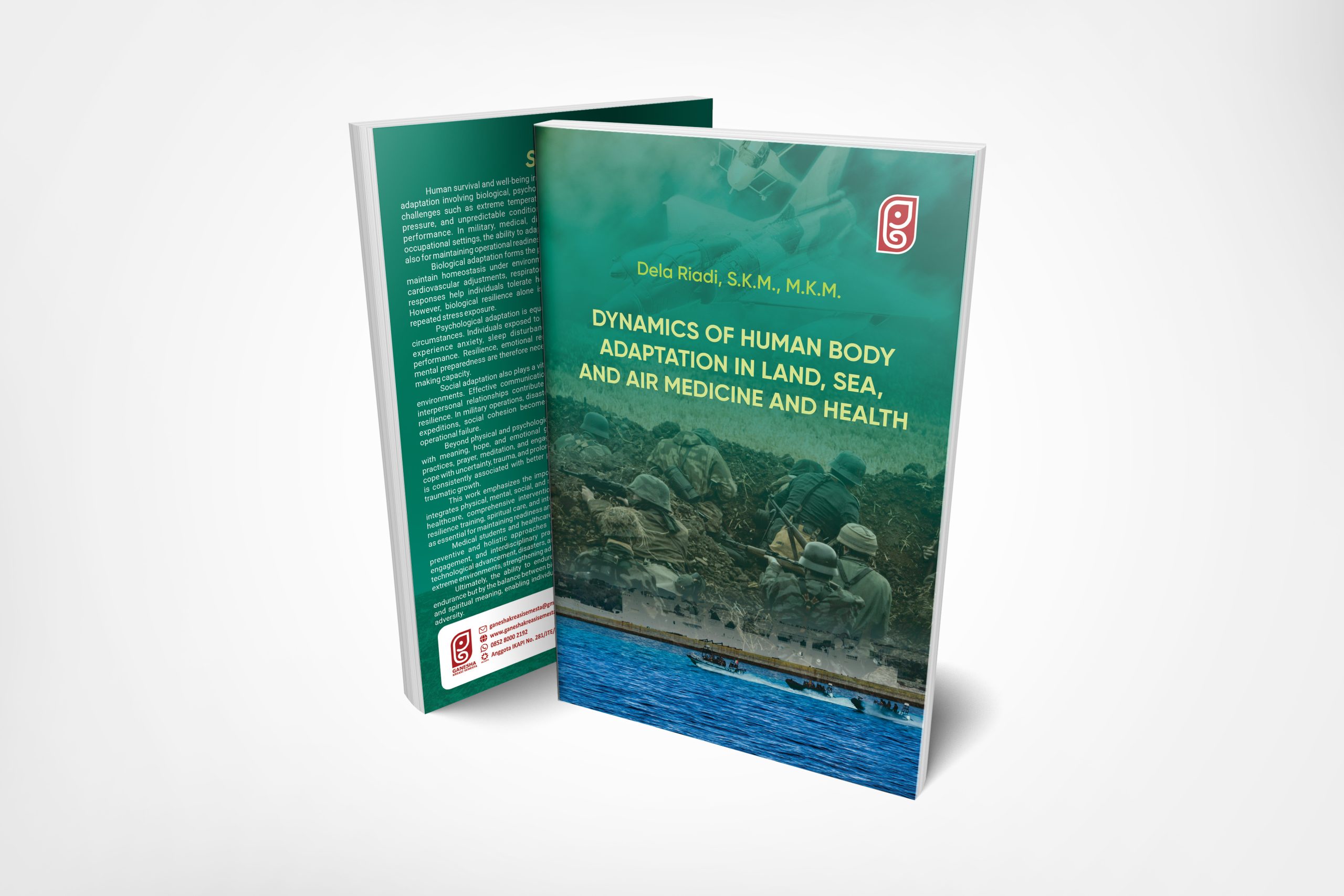
Dynamics of Human Body Adaptation in Land, Sea, and Air Medicine and Health
Human survival and well-being in extreme environments depend on a complex process of adaptation involving biological, psychological, social, and spiritual dimensions. Environmental challenges such as extreme temperatures, hypoxia, isolation, confinement, high operational pressure, and unpredictable conditions place significant demands on human health and performance. In military, medical, disaster-response, maritime, aerospace, and high-risk occupational settings, the ability to adapt effectively becomes essential not only for survival but also for maintaining operational readiness and overall well-being.
Biological adaptation forms the physiological foundation that enables the human body to maintain homeostasis under environmental stress. Mechanisms such as thermoregulation, cardiovascular adjustments, respiratory compensation, erythropoiesis, and neuroendocrine responses help individuals tolerate heat, cold, pressure changes, and oxygen deprivation. However, biological resilience alone is insufficient in sustaining health under prolonged or repeated stress exposure.
Psychological adaptation is equally critical in preserving mental stability during difficult circumstances. Individuals exposed to confined, isolated, or high-pressure environments often experience anxiety, sleep disturbances, emotional exhaustion, and reduced cognitive performance. Resilience, emotional regulation, mindfulness, adaptive coping strategies, and mental preparedness are therefore necessary to support psychological well-being and decision-making capacity.
Social adaptation also plays a vital role, particularly in small teams operating in restricted environments. Effective communication, trust, teamwork, conflict management, and strong interpersonal relationships contribute significantly to collective functioning and individual resilience. In military operations, disaster-response missions, healthcare systems, and extreme expeditions, social cohesion becomes an important protective factor against stress and operational failure.
Beyond physical and psychological mechanisms, spiritual resilience provides individuals with meaning, hope, and emotional grounding during adversity. Spiritual beliefs, reflective practices, prayer, meditation, and engagement in supportive communities can help individuals cope with uncertainty, trauma, and prolonged stress. A strong sense of purpose and meaning in life is consistently associated with better psychological adaptation, emotional stability, and post-traumatic growth.
This work emphasizes the importance of a holistic approach to health promotion that integrates physical, mental, social, and spiritual dimensions. In military medicine and preventive healthcare, comprehensive interventions—including stress management, health education, resilience training, spiritual care, and interdisciplinary collaboration—are increasingly recognized as essential for maintaining readiness and improving health outcomes.
Medical students and healthcare professionals have an important role in implementing preventive and holistic approaches to care, particularly through education, community engagement, and interdisciplinary practice. As global challenges such as climate change, technological advancement, disasters, and operational demands continue to increase exposure to extreme environments, strengthening adaptive capacity becomes increasingly vital.
Ultimately, the ability to endure extreme conditions is shaped not only by physical endurance but by the balance between biological resilience, psychological stability, social support, and spiritual meaning, enabling individuals not merely to survive, but to adapt and thrive under adversity.
Penulis : Dela Riadi, S.K.M., M.K.M.
Halaman buku : 164
DOWNLOAD
PRE-ORDER | Rp 62.000