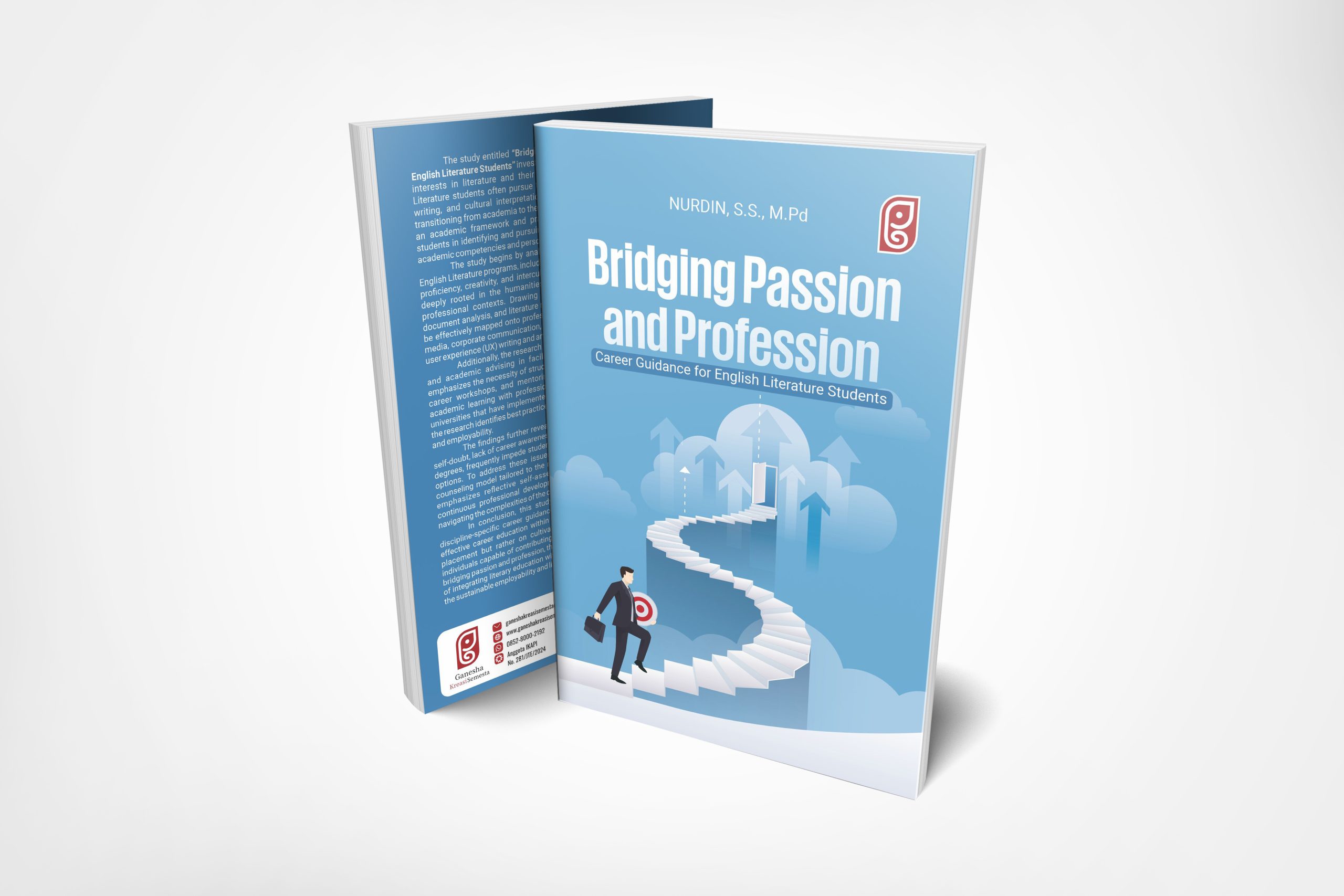
Bridging Passion And Profession: Career Guidance for English Literature Students
The study entitled “Bridging Passion and Profession: Career Guidance for English Literature Students” investigates the alignment between students’ academic interests in literature and their subsequent professional trajectories. English Literature students often pursue their field out of intellectual passion for reading, writing, and cultural interpretation; however, many encounter challenges when transitioning from academia to the professional world. This research aims to provide an academic framework and practical strategies to support English Literature students in identifying and pursuing diverse career pathways that reflect both their academic competencies and personal aspirations.
The study begins by analyzing the core competencies developed through English Literature programs, including critical thinking, analytical reasoning, linguistic proficiency, creativity, and intercultural understanding. These competencies, while deeply rooted in the humanities, possess high transferability across various professional contexts. Drawing upon a combination of qualitative interviews, document analysis, and literature review, the research explores how these skills can be effectively mapped onto professions in education, publishing, journalism, digital media, corporate communication, and emerging technology-driven sectors such as user experience (UX) writing and artificial intelligence communication design.
Additionally, the research examines the role of institutional career guidance and academic advisingin facilitating students’ career readiness. The study emphasizes the necessity of structured interventions, such as internship programs, career workshops, and mentoring systems, which help students to integrate academic learning with professional exposure. Through comparative analysis of universities that have implemented humanities-specific career guidance initiatives, the research identifies best practices for bridging the gap between literary scholarship and employability.
The findings further reveal that psychological and social factors, including self-doubt, lack of career awareness, and societal misconceptions about humanities degrees, frequently impede students’ confidence in exploring non-traditional career options. To address these issues, the study proposes a comprehensive career counseling model tailored to the needs of English Literature students. This model emphasizes reflective self-assessment, transferable skill identification, and continuous professional development, thereby fostering students’ confidence in navigating the complexities of the contemporary job market.
In conclusion, this study underscores the importance of holistic and discipline-specific career guidance for English Literature students. It argues that effective career education within the humanities should not merely focus on job placement but rather on cultivating adaptable, creative, and critically minded individuals capable of contributing meaningfully to various professional sectors. By bridging passion and profession, this research highlights the transformative potential of integrating literary education with strategic career planning, ultimately promoting the sustainable employability and lifelong growth of English Literature graduates.
Author : Nurdin, S.S., M.Pd
Book Page : 228
DOWNLOAD
PRE-ORDER | Rp. 76.000