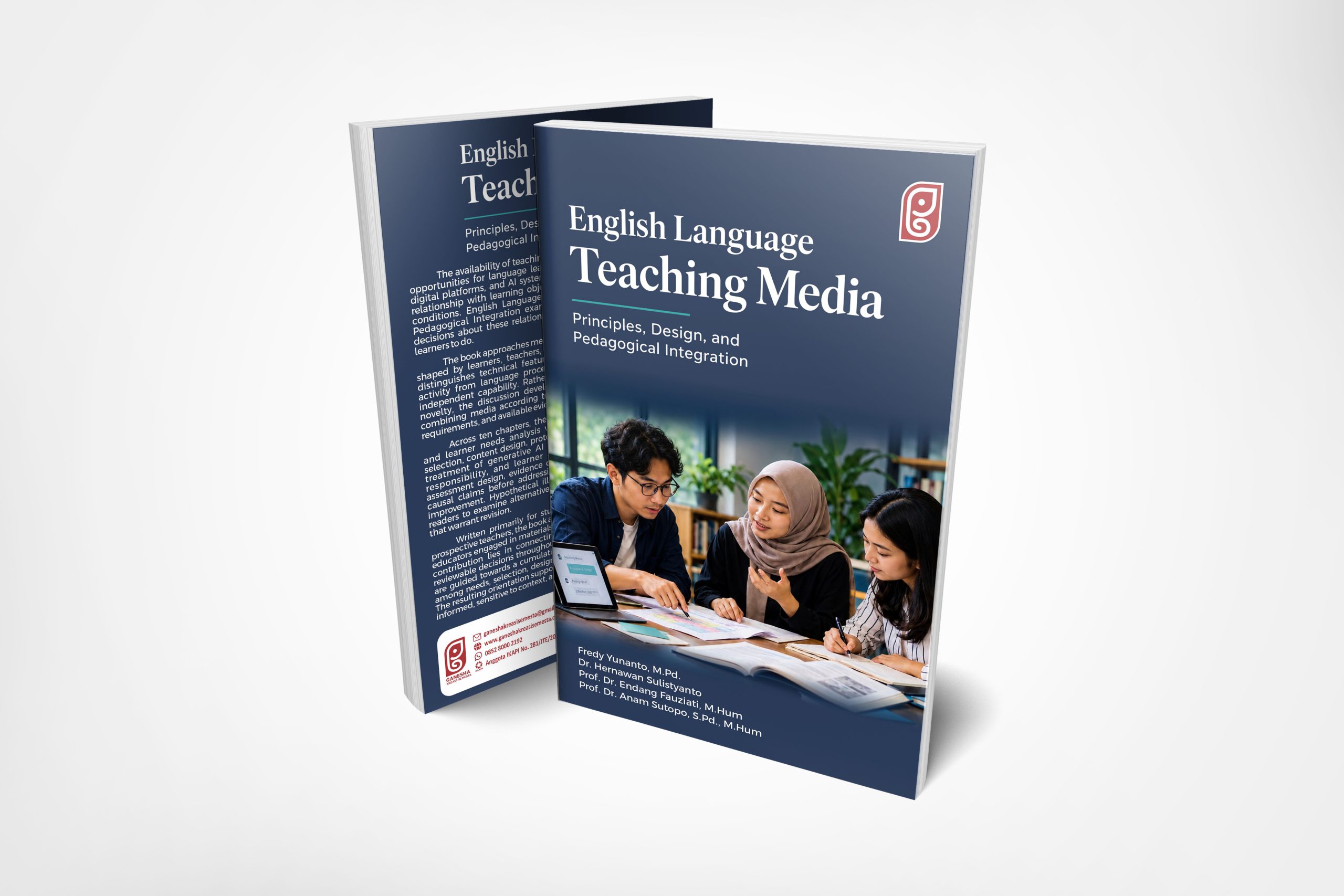
English Language Teaching Media: Principles, Design, and Pedagogical Integration
The availability of teaching resources does not guarantee meaningful opportunities for language learning. Printed materials, audiovisual texts, digital platforms, and AI systems acquire educational value through their relationship with learning objectives, tasks, participation, and classroom conditions. English Language Teaching Media: Principles, Design, and Pedagogical Integration examines how teachers can make informed decisions about these relationships and evaluate what their use enables learners to do.
The book approaches media as components of learning environments shaped by learners, teachers, resources, interaction, and assessment. It distinguishes technical features from pedagogical affordances, visible activity from language processing, and supported performance from independent capability. Rather than ranking resources by technological novelty, the discussion develops a contextual basis for selecting and combining media according to language-learning purposes, accessibility requirements, and available evidence.
Across ten chapters, the book connects conceptual understanding and learner needs analysis with pedagogical planning, comparative selection, content design, prototyping, and classroom implementation. Its treatment of generative AI emphasises output verification, human responsibility, and learner agency. Subsequent chapters examine assessment design, evidence collection, interpretation, and the limits of causal claims before addressing diagnosis, adaptation, and continuing improvement. Hypothetical illustrations and application activities invite readers to examine alternatives, justify decisions, and identify conditions that warrant revision.
Written primarily for students of English language education and prospective teachers, the book also supports practising teachers and teacher educators engaged in materials development and professional learning. Its contribution lies in connecting conceptual distinctions with practical, reviewable decisions throughout the resource-development cycle. Readers are guided towards a cumulative portfolio documenting the relationships among needs, selection, design, implementation, evaluation, and revision. The resulting orientation supports professional judgement that is evidence-informed, sensitive to context, and open to change.
Authors: Fredy Yunanto, M.Pd. | Dr. Hernawan Sulistyanto | Prof. Dr. Endang Fauziati, M.Hum | Prof. Dr. Anam Sutopo, S.Pd., M.Hum
Editor: Dr. Ria Kasanova, M.Pd.
Halaman buku: 197
DOWNLOAD
PRE-ORDER | Rp 70.000